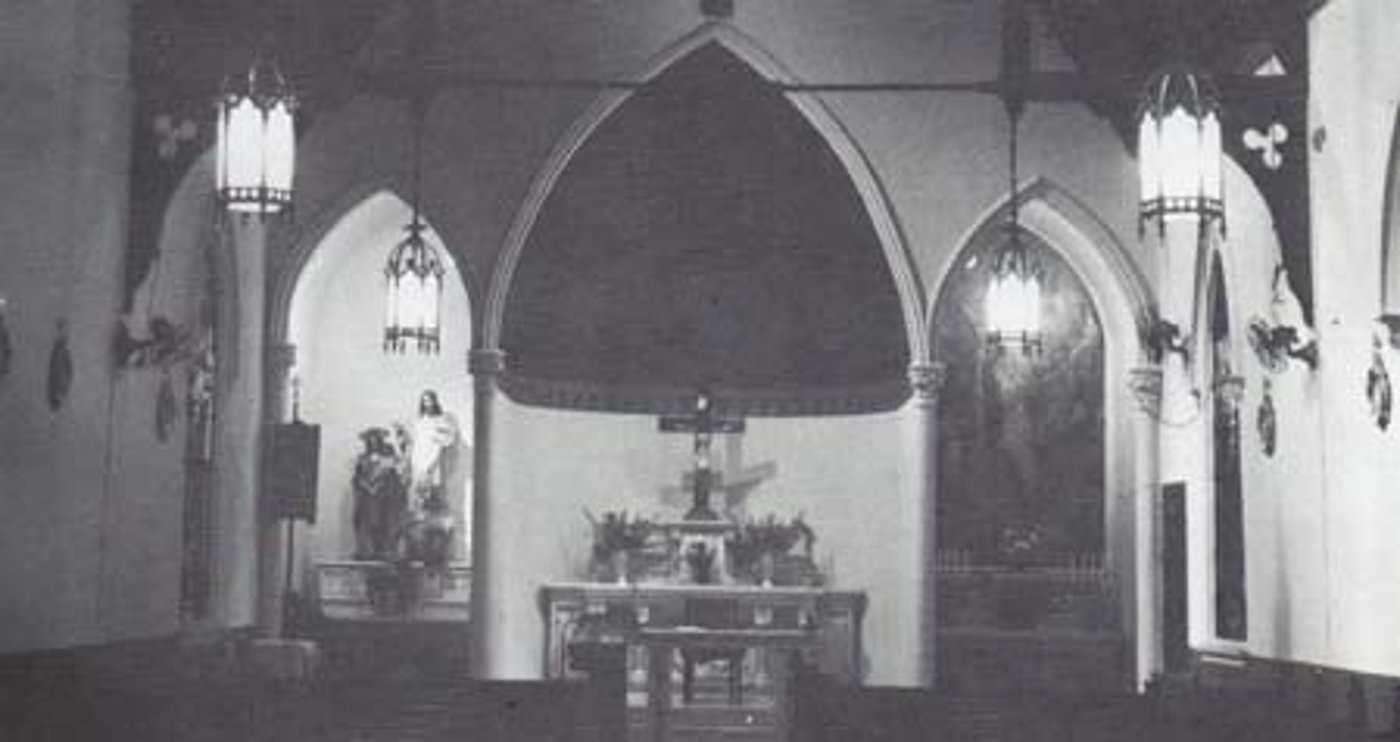
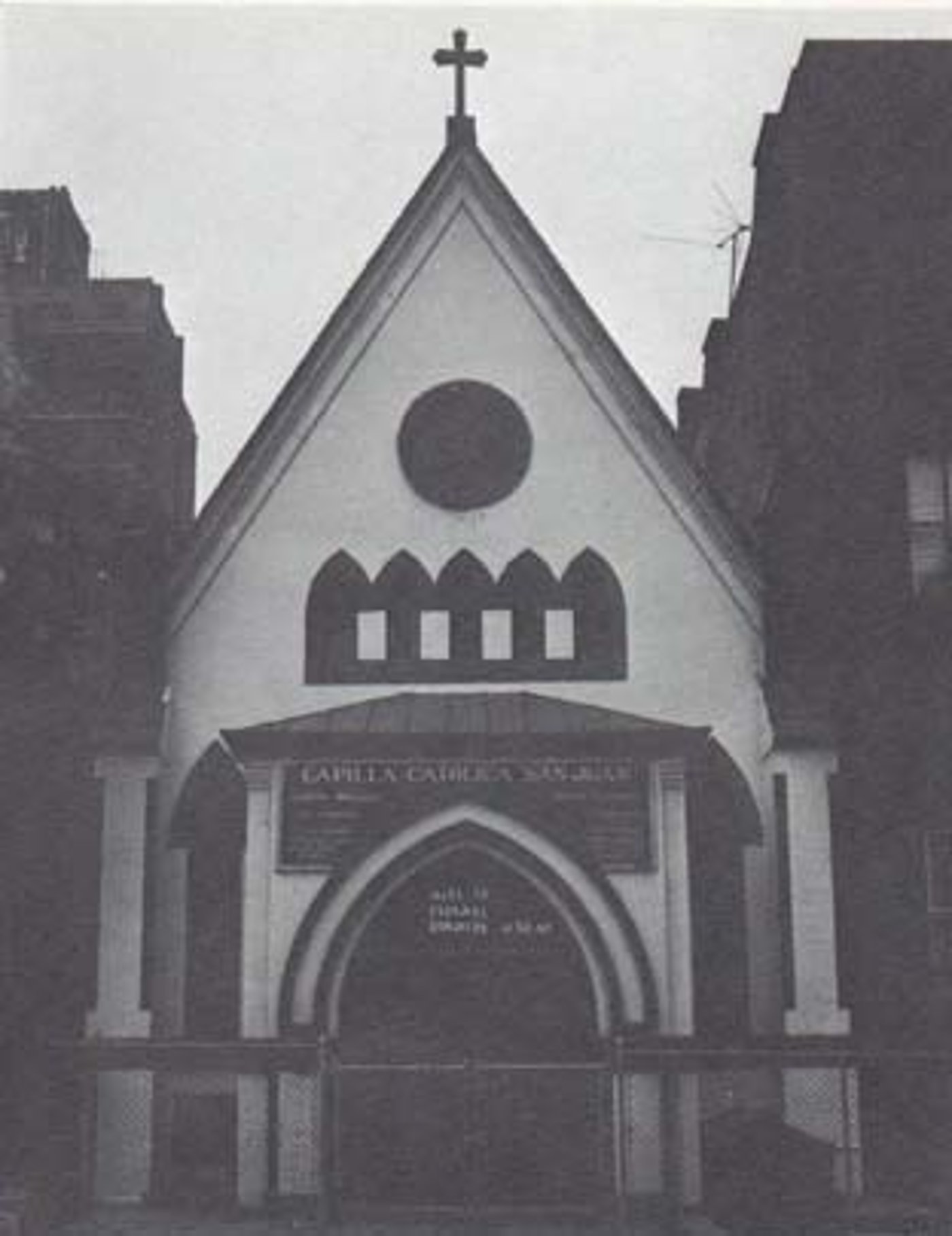
In the beginning, the Most Reverend John Loughlin, the first Bishop of Brooklyn, purchased a lot of land bounded by Greene, Lafayette, Clermont and Vanderbilt Avenues, as the site for a Brooklyn Cathedral that was never completed. On that site in 1878 was erected the small Chapel of St. John, which served the sparse number of Catholics in the community. It was here on August 25, 1879 that the first Pastor, Patrick O’Hare, organized the Rosary Society. It has the honor of being the oldest society in the parish. In September of 1909, Reverend George Mundelein was consecrated Auxiliary Bishop of Brooklyn. Shortly afterwards he was appointed to St. John’s Chapel. While there, he added the Holy Name and Ushers Guild to the roster of parish societies. He also began the process of erecting Queen of All Saints Cathedral Chapel, overseeing every detail himself.
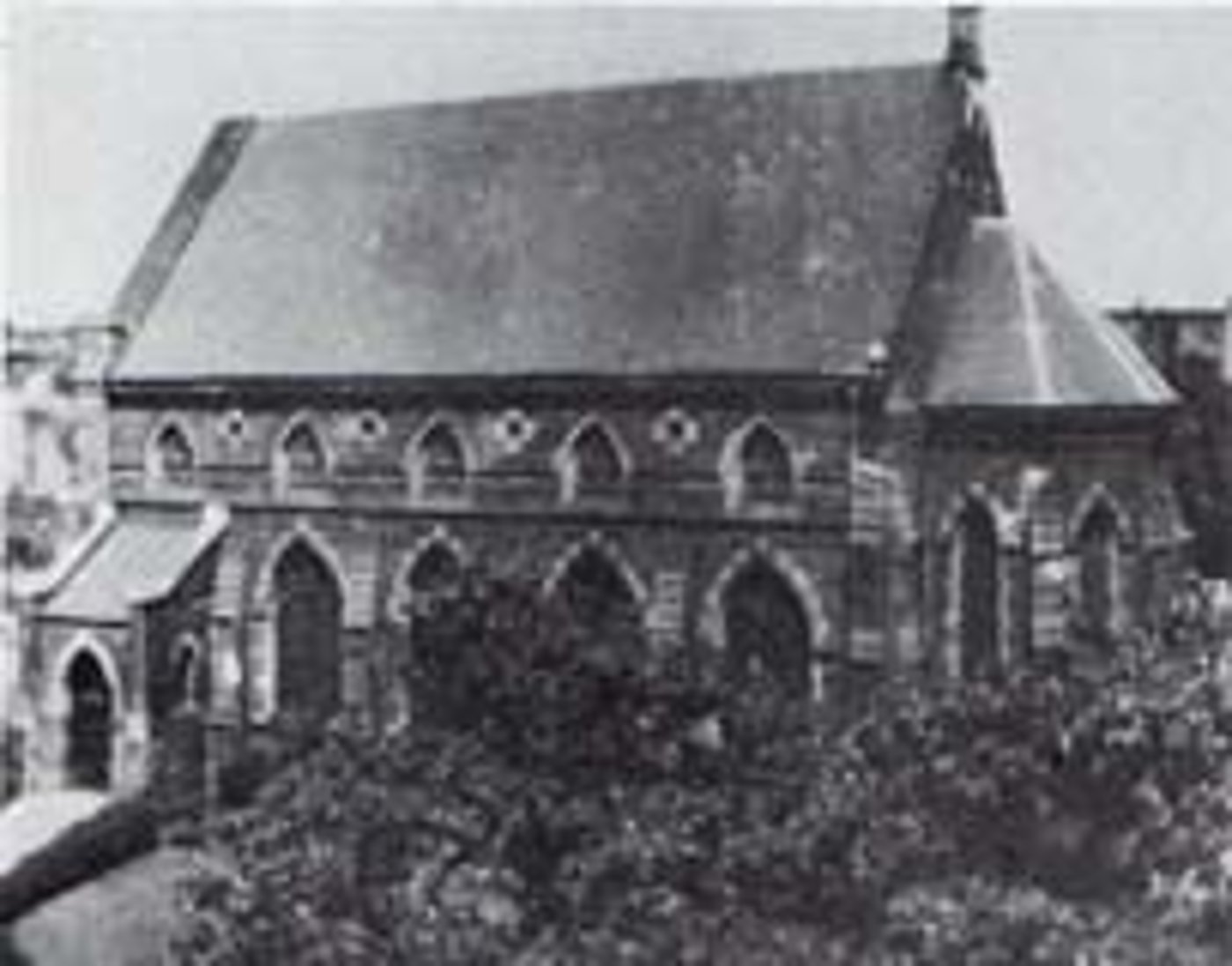
The structure was to be built on a plot of land at Vanderbilt and Lafayette Avenues, purchased by Bishop McDonnell, the second Bishop of Brooklyn, from the Samuel Vernon estate. The architect, Gustave Steinbeck, designed a Gothic structure, modeled after Sainte Chapelle in Paris. Modeled on medieval concepts, the soaring interior space is supported by towering stone columns, holding in place ribbed vaults. Fourteen great windows line the East and West walls. Similar in design to Sainte Chapelle, they contain 260 subjects from the Old and New Testament, beginning with Creation and ending with the life of Christ and his Apostles. This Gothic concept was to provide instruction in a pre-literate world. The windows are set in geometric and ornamental designs of mosaic glass with rich borders. The glass used is English Antique and each complete window contains at least 22,822 pieces of glass. Like its model, the upper portions of the walls are surfaces of richly colored stained glass which gives the impressive space a feeling of shimmering light. This entire work was designed, fashioned and constructed by Alex S. Locke, whose artistry and care inspired his descendants to contribute to the restoration of the windows during the 1970s.
The Baptismal font, carved from one piece of marble, stands at the entrance to the nave. The straight progression from font to altar is meant to symbolize one’s passage through life, up the straight and narrow path from Baptism to the Altar of salvation. This progression, for the 12th and 13th century believer, echoed the elements of their every day lives; sequoia sized trees with dappled light streaming through a multi-storied canopy.
The church is built of carved white stone, both inside and out. The rerdos has six life-sized angels and is topped by a soaring steeple that echoes the bronze one that once capped the building. Only two statues hold position within the church, Mary on the Gospel side and Anthony on the Epistle side. They are housed in niches raised above the altar rail on either side of the church. The exterior of the church, however, was designed with niches for 36 life-sized statues. Only 24 have been put in place. There are two tapestries that hang at either side of the altar. They depict the Annunciation and the Coronation of Mary as Queen of All Saints. These replaced the original three, which also included the Nativity. The pews are made of Norman oak and bronze light fixtures and fittings prevail throughout. The only other color comes from the light streaming through the magnificent stained glass windows, and from the tapestries. A four manual Wersching organ was installed, the largest in Brooklyn at the time. The Brooklyn Eagle indicated that noted experts claimed that Queen of All Saints would be the most exquisite church in America.
Bishop Mundelein added plans for a separate school building, patterned on modern school architecture to be added as a surround to the front of the church. The entrance to the church would be on Lafayette Avenue and the school’s entrance would be on Vanderbilt for Girls and the Clermont Avenueside for Boys. The school continues to provide instruction for elementary students from Kindergarten to Eighth Grade.
Queen of All Saints Church was solemnly dedicated on Thanksgiving Day, November 27, 1913. Bishop Mundelein embarked on the final phase of the project in 1914: the completion of the apse and building of the rectory at the north end of the property. Unfortunately, the Bishop did not see the completion of this phase because he was appointed Archbishop of Chicago in December of 1915.
During the long pastorate of Monsignor Joseph Conway (1930-1947), the parish experienced many changes. New territory was added when part of Our Lady of Mercy parish was added. The local community was expanding in response to many of the employment opportunities opening in the area. Monsignor Conway instituted an annual census, where he and the other parish priests went from hose to house to gather information on the new influx of Catholics. To meet the needs of his growing parish, Monsignor Conway incorporated the Cumberland Street Chapel, previously attended by the Spanish Vincentian Fathers, into the parish. To preserve the name of the original chapel built on Clermont Avenue, the name was changed to St. John’s Chapel. It addressed the need for additional Masses in the growing community.
It was during Monsignor Conway’s tenure that part of Queen of All Saints School became a two year annex to Bishop McDonnell Memorial High School. The “Boys” side of the building housed classes in English, History, Latin, Algebra, Geometry, Biology, Art, Music and Religion, constituting the Freshman and Sophomore years. Upon completion, the young ladies transferred to the main building on Eastern Parkway for the remaining two years of high school. Queen of All Saints was one of four diocesan-wide annexes for Bishop McDonnell Memorial High School. The annex was closed when the High School was.
The glory of Queen of All Saints has never been restricted to its magnificent architecture, stained glass, bronze and stone exterior, but resides most fully in its parishioners. Originally populated by the Irish, English, German and Italian immigrants who lived in its neighborhood, its incandescence has grown to include representatives of the rest of Western and eastern Europe, Africa, Asia, South America and the Caribbean. It is a parish celebrated for its diversity, genuine warmth and rich celebration of God’s Word and Sacrifice in beautiful music, song and prayerful liturgy. It remains an “exquisite church” but one whose parishioners are its real treasures. It is 100 years later, and the story continues…
Sources:
- Queen of All Saints (1979 centennial anniversary journal)
- Maker of Windows: Cathedral Chapel, Queen of All Saints. Locke Decorative Co., 1913.
- De Finance, Lawrence. The Sainte-Chapelle: Palais de la Cité, 2004.
- AIA Guide to NYC. (NY: White and Wellerdsy AIA, 1967).
Mary, Queen of All Saints
Of all the titles given to the Blessed Mother as tokens of devotion, the title “Queen of All Saints” ranks among the most popular. Roman Catholic parishes and parochial schools throughout the United States proudly display their allegiance to the Mother of God through this title.
In 1954, Pope Pius XII originally designated May 31as the Marian feast day to celebrate the Queenship of Mary. Later, the Second Vatican Council chose August 22 as the date to commemorate Mary specifically under the title “Queen of All Saints” as a festive prolongation of the Feast of Mary’s Assumption. Mary is sometimes likened to the moon among lesser stars (“Velut inter stellas luna minores”), meaning that she is the greatest among lesser saints, exceeding all other saints in holiness.
Mary is called the Queen of All Saints because she made the most diligent use of the rich treasure of grace given to her by God and excelled in every virtue much more than every other saint. All the traits of Jesus were expressed in her as faithfully as they could be expressed in any creature. As she surpasses all saints in choosing a virtuous and meritorious life, so Mary stands higher than all the faithful in receiving glory and reward. After God there is no greater bliss for the blessed in heaven than to behold her, their glorious Queen.
We should pray to the Queen of All Saints for the grace to remember that God has created us to live a life of holiness in this world and to become saints in heaven. God will give us enough grace to do this if only we have an earnest desire for holiness just as Mary did. Holiness does not consist in heroic deeds, but in doing the will of God perfectly, loving God with all our heart and our neighbor for God’s sake, keeping our soul from sin, and being united with God through prayer and the sacraments. We should pray to Mary to obtain for us the grace to imitate her holiness in this world and enjoy the vision of God and her presence for all eternity in heaven.
Follow this link to join others saying a perpetual rosary.